

Modern grain storage solutions play a critical role in strengthening climate resilience and reducing post-harvest losses across agrifood systems.
A global challenge with a direct impact on food security
Transforming agrifood systems is at the heart of today’s global climate discussions. According to FAO, the sector has the potential to contribute up to one-third of global emission reductions. However, limited climate-focused financing remains one of the biggest barriers to deploying the innovations needed for a more sustainable and resilient future.
The need is clear: produce better, reduce environmental impact, and strengthen the infrastructures that ensure efficiency, stability and reduced losses across the supply chain. This includes sustainable practices at farm level, but also efficient post-harvest management and advanced grain storage systems, an essential part of the value chain that is often overlooked.
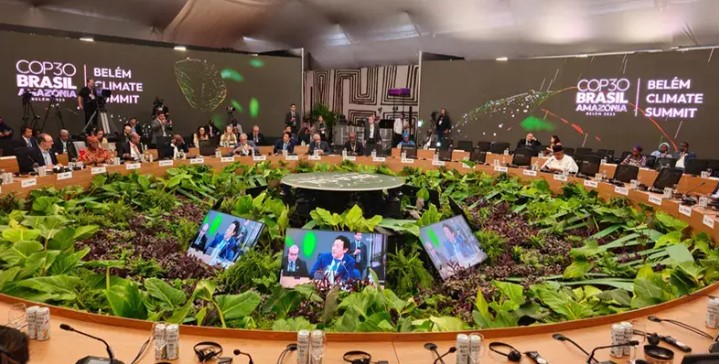
During COP30, held in Belém (Brazil), FAO highlighted that the climate funding gap continues to hinder progress in agrifood innovation. The organisation stressed that the sector could contribute up to one-third of global emission reductions, provided there is real commitment to investing in sustainable solutions across the entire chain, including storage infrastructure and post-harvest management.
Climate innovation: an opportunity for the entire agrifood chain
The current climate funding gap restricts the development of technologies that could transform everything from soil health to resource efficiency. As highlighted by FAO, led initiatives, solutions such as agroforestry, land restoration and resilient aquaculture or livestock practices are crucial in the path towards climate adaptation and mitigation.
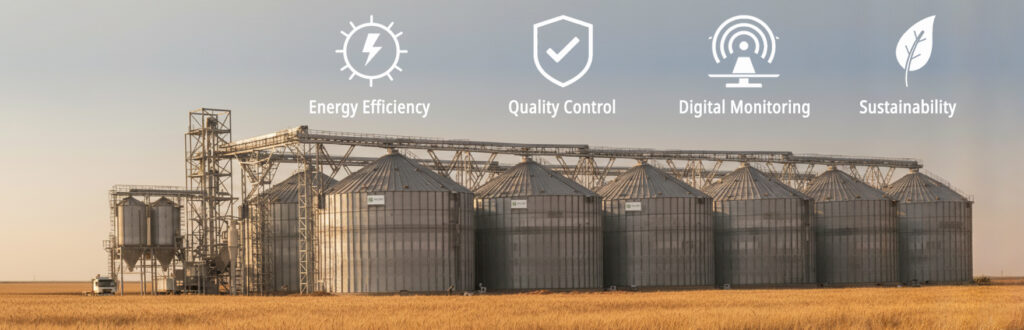
Yet transformation cannot happen solely at the production stage. Reliable, energy-efficient and technologically advanced grain storage infrastructure is equally essential. Without adequate facilities: well-designed silos, ventilation systems, climate control and digital monitoring, post-harvest losses remain high, reaching between 10% and 30% in many countries.
How intelligent grain storage contributes to climate resilience
Innovation in grain storage plays a direct and measurable role in meeting climate goals:
√ Reduced post-harvest losses, easing pressure on agricultural production.
√ Optimised energy use, thanks to efficient ventilation and smart monitoring systems.
√ Improved food safety, with better control over grain quality and reduced contamination risks.
√ More resilient infrastructure, capable of withstanding rising temperatures and extreme weather variations.
For over 45 years, Silos Córdoba has supported clients around the world in modernising their storage systems through solutions that combine advanced engineering, digitalisation and energy efficiency. From flat-bottom and hopper silos to complete turnkey plants, our facilities ensure that agricultural production reaches markets in optimal condition, regardless of climate fluctuations.
The importance of investing in key infrastructure
The African Farming article emphasises that the climate funding gap is more than an economic issue, it represents a missed opportunity to drive sustainable agricultural growth. This insight aligns closely with a fundamental reality: the agrifood chain cannot be transformed without robust infrastructure capable of reducing risks and strengthening system resilience.
In this context, investing in modern grain storage facilities is not simply a technical upgrade; it is a strategic commitment to environmental sustainability and long-term food security.
Building a more resilient future
Climate challenges require action across the entire agrifood chain, from production to conservation and distribution. Innovation, climate-focused financing and the right technical solutions are essential to create a more efficient, sustainable and future-proof system.
At Silos Córdoba, we remain committed to supporting this transition. Through projects designed to enhance storage quality, reduce losses and reinforce food security, we continue to work alongside farmers, cooperatives and agribusinesses in more than 45 countries.
Source: African Farming – “FAO is bridging the climate funding gap for agrifood innovation”.
FAO – COP30 (Belém, Brazil) – “FAO at COP30: Agrifood systems for climate action”.