
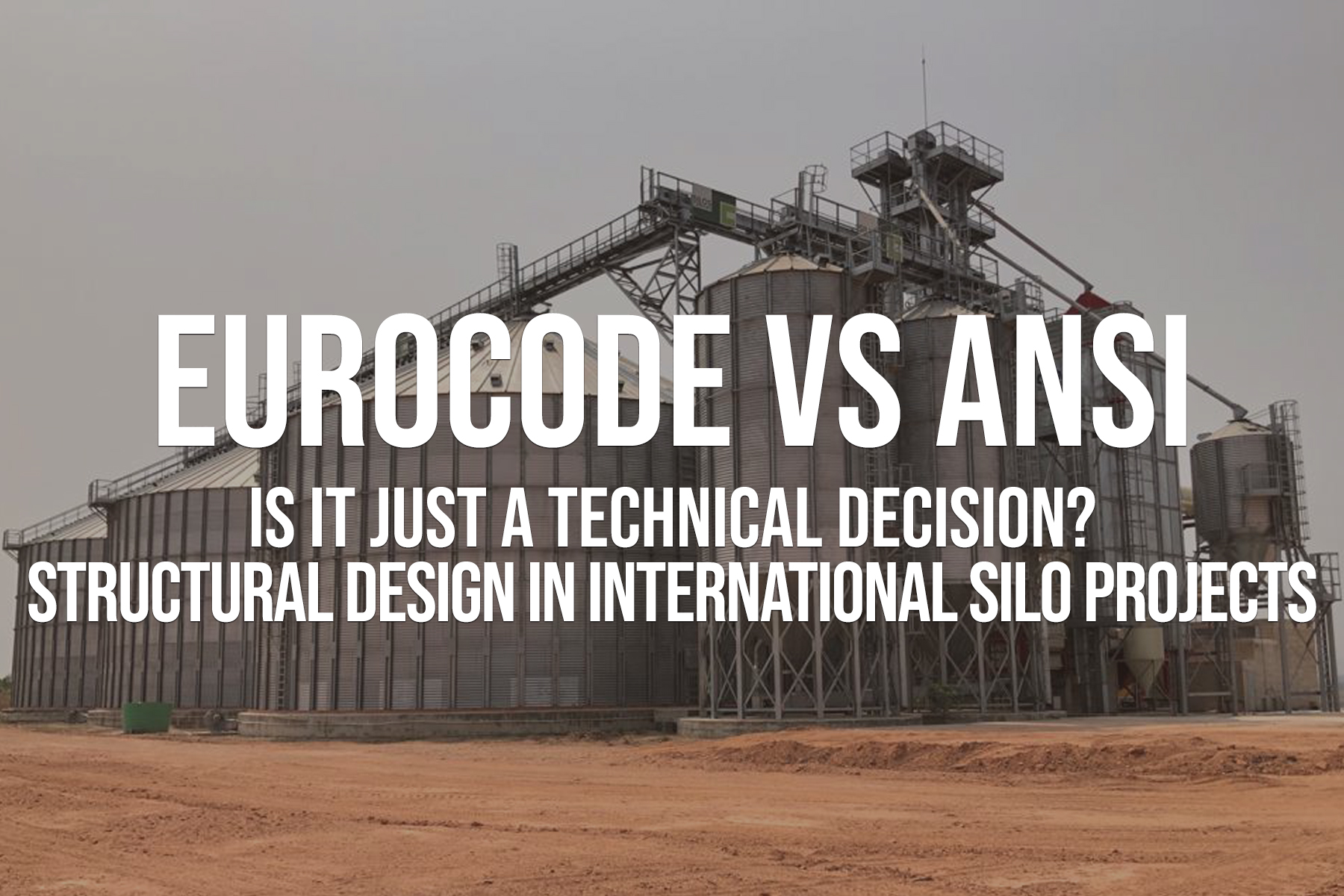
When planning a grain storage project, one question often arises:
Is it better to design silos according to Eurocode or ANSI?
At first glance, this may seem like a purely technical decision reserved for engineers. In reality, however, it directly affects safety, durability, and long-term peace of mind.
Two Different Approaches to Structural Safety
Both the European system (Eurocode) and the American system (ANSI/ASAE) are internationally recognized standards. Both allow for the design of safe and functional silos.
The difference lies in their philosophy.
Generally speaking, silos designed under Eurocode tend to include:
√ Thicker wall sheets
√ More robust structural reinforcements
√ A higher number of structural bolts
√ Stronger anchoring systems
√ Greater overall structural weight
√ Higher resistance to seismic actions
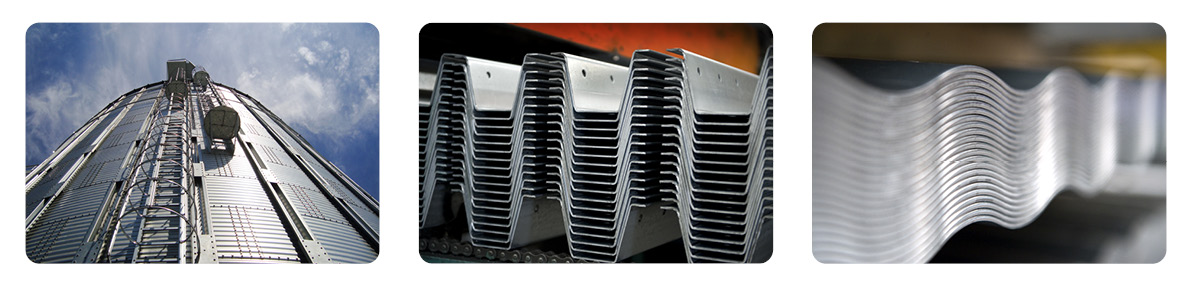
Eurocode applies more demanding safety factors when calculating loads and material resistance.
ANSI, on the other hand, uses a design method based on allowable stresses (ASD), which in certain scenarios can be less conservative.
At Silos Córdoba, we frequently work with international clients who request one standard or the other depending on the project location, financing requirements, or local regulations. Understanding the implications of each system is therefore essential to make an informed and responsible decision.
This is not about labeling one system as “right” and the other as “wrong.”
The key difference lies in the level of structural safety margin incorporated into the design.
What About the Cost?
This is where many doubts usually appear.
When analyzing the total cost of a storage facility, the silos themselves typically represent around 20–21% of the overall project value. The remaining investment covers civil works, conveying and conditioning equipment, installation, electrical systems, and logistics.
The weight difference between a Eurocode-designed silo and an ANSI-designed silo is generally around 8–12%.
In financial terms, this may translate into a 5–8% difference within the silo portion.
However, when considered within the total project budget, that variation often represents only about 2–3% of the overall investment.
In other words: the global impact is relatively small, while the structural safety margin may increase significantly.
Designing with the Long Term in Mind
A silo is not a temporary structure. It is infrastructure designed to operate for decades.
Throughout its lifespan, it must withstand:
♦ Variable grain loads
♦ Wind forces
♦ Possible seismic activity
♦ Temperature changes
♦ Challenging environmental conditions
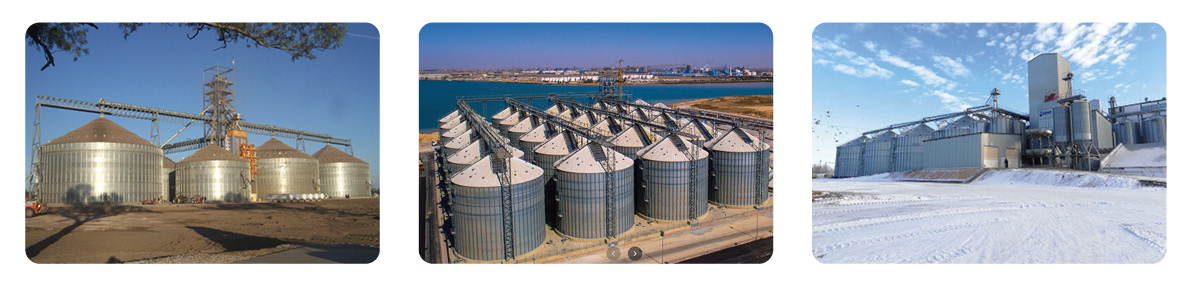
In international projects, whether in Europe, the Americas, Africa, or Asia, operating conditions can vary widely. High temperatures, coastal corrosion, seismic zones, or significant thermal fluctuations all place additional demands on structural performance.
For engineering teams, including those at Silos Córdoba, the chosen design standard is not merely a compliance issue. It reflects how the installation is expected to perform over the long term, under real operating conditions.
Beyond Steel Thickness
Choosing between Eurocode and ANSI is not simply about comparing plate thickness or bolt quantity.
It means considering:
◊ The desired level of structural robustness
◊ Performance under extreme conditions
◊ Long-term durability
◊ Operational reliability for years to come
In strategic infrastructures such as grain storage, where safety and continuity are essential, these aspects become especially important.
A Decision That Goes Beyond Compliance
Both systems are well-established and globally recognized.
The key is understanding what each one implies and making an informed decision aligned with the project’s objectives and the conditions in which the facility will operate.
Because ultimately, beyond the chosen standard, what truly matters is that the structure performs safely today, and 30 years from now.