
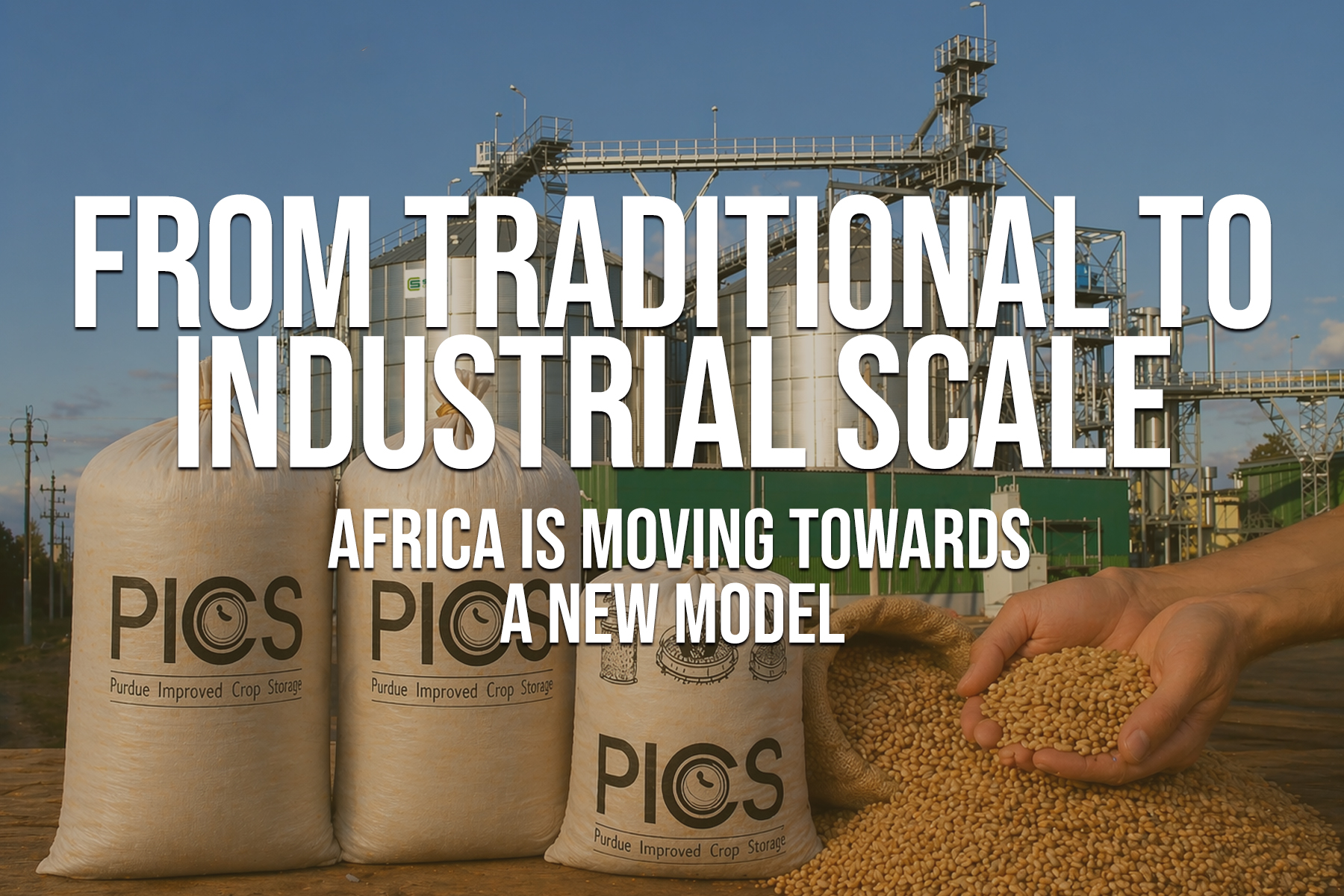
In recent years, much has been said about post-harvest losses in Africa, and for good reason. Estimates suggest that more than 30% of grain production is lost due to inadequate storage, impacting both food security and farmers’ incomes.
But today, the conversation is evolving.
Africa is no longer at the stage of identifying the problem. In many regions, solutions are already being implemented. The real challenge now is different: how to scale these solutions to meet growing demand and increasingly complex supply chains.
According to World Grain, several countries across sub-Saharan Africa are actively promoting improved post-harvest practices. Technologies such as hermetic storage bags, including Purdue Improved Crop Storage (PICS), have proven effective in reducing losses at smallholder level by limiting oxygen exchange and preserving grain quality.
These solutions represent an important step forward. At the same time, they reveal a structural limitation.
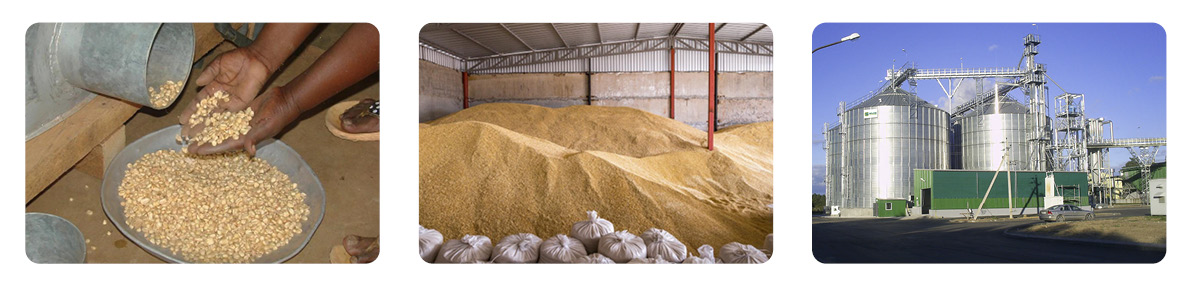
A fragmented model under pressure
Most current storage systems in many African markets are still based on decentralized, small-scale solutions. While these approaches are accessible and relatively low-cost, they are not designed to support large volumes, long-term storage, or integrated supply chains.
At the same time, demand is rising rapidly.
Africa’s population is expected to grow significantly in the coming decades, while grain consumption and trade volumes continue to increase. In parallel, countries are strengthening their position in regional and international markets, which requires more reliable storage, better quality control, and consistent supply.
This creates a gap between what current systems can handle and what the market increasingly requires.
The real barriers to scaling
One of the most revealing aspects highlighted by World Grain is that the challenge is not only technical, it is also structural.
Among the main barriers:
√ Cost constraints, particularly for farmers and local operators
√ Limited access to technology and infrastructure
√ Taxation policies, such as VAT applied to storage solutions in some countries
√ Lack of integrated logistics systems
In some cases, even when solutions exist, adoption remains limited because they are not economically viable at scale or not supported by broader infrastructure.
From isolated solutions to integrated systems
As grain markets evolve, the focus is shifting from individual solutions to system-level efficiency.
Reducing post-harvest losses is no longer just about storing grain safely, it is about managing the entire post-harvest chain:
♦ handling
♦ conditioning
♦ storage
♦ monitoring
♦ and distribution
This is where industrial storage infrastructure becomes essential.
Unlike small-scale solutions, large-capacity storage systems allow:
◊ better control of temperature and moisture
◊ reduced spoilage over long periods
◊ optimized logistics and throughput
◊ consistent grain quality for trade and processing
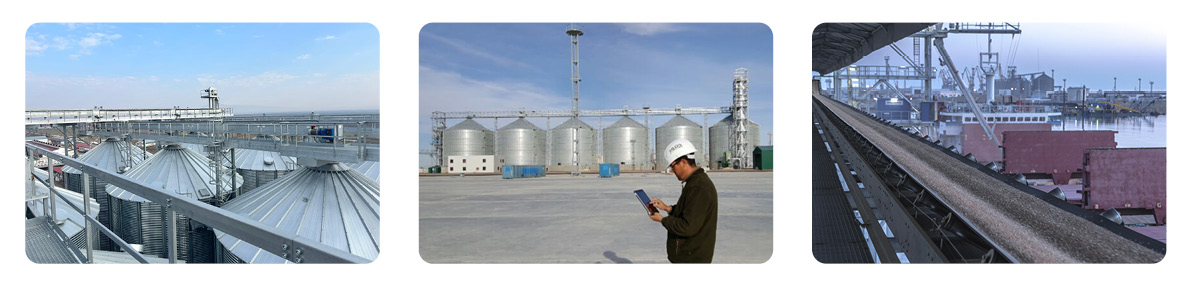
Companies such as Silos Córdoba are part of this shift, providing storage and handling solutions designed to support operations at scale, from inland facilities to port terminals and feed plants.
Looking ahead: scaling is the real challenge
The future of grain storage in Africa will not depend solely on new technologies, but on the ability to connect those technologies within efficient, scalable systems.
Small-scale solutions will continue to play a role, especially at farm level. But as markets grow, infrastructure will need to evolve accordingly.
Because in the end, reducing losses is not just about preservation, it is about enabling growth.
This article is based on insights from World Grain, “Africa seeks solutions for post-harvest losses”, April 2026.