
Why climate matters in grain storage
Grain storage conditions have a direct impact on product quality, preservation periods and economic performance. While moisture and aeration are often the most discussed factors, ambient temperature also plays a critical role, especially in regions exposed to extreme climatic conditions.
Countries in the Middle East, North Africa, Sub-Saharan Africa and parts of Central Asia frequently experience summer temperatures exceeding 45°C. On the other hand, regions in Northern Europe, Canada and Central Asia may face prolonged periods of freezing temperatures. Both situations can create challenges inside storage silos if adequate thermal protection is not considered during the design stage.
The impact of temperature fluctuations inside a silo
Temperature differences between the external environment and the grain mass can generate several storage problems:
√ Moisture migration inside the grain bulk.
√ Condensation on the roof and upper silo walls.
√ Formation of hot spots.
√ Increased risk of mould growth.
√ Insect activity in warm areas.
√ Product quality deterioration.
√ Reduction of safe storage periods.
These phenomena are often intensified when day-night temperature variations are significant, a common situation in desert and continental climates.
How thermal insulation helps preserve grain quality
Thermal insulation acts as a barrier that reduces heat transfer between the external environment and the silo interior.
When properly installed on the roof and upper wall rings, insulation contributes to:
♦ More stable internal temperatures.
♦ Reduced condensation risks.
♦ Improved effectiveness of aeration systems.
♦ Better preservation of grain quality.
♦ Lower energy consumption when mechanical ventilation is used.
♦ Greater storage security during long-term storage campaigns.
The objective is not to completely isolate the grain from external temperatures but rather to minimise rapid thermal fluctuations that can negatively affect storage conditions.
Roof insulation: the most critical area
The silo roof is usually the surface most exposed to solar radiation.
In hot climates, roof temperatures can rise significantly above ambient temperature, transferring heat to the upper grain layers and increasing the risk of moisture migration.
For this reason, roof insulation is often considered the first and most important protection measure in extreme climates.
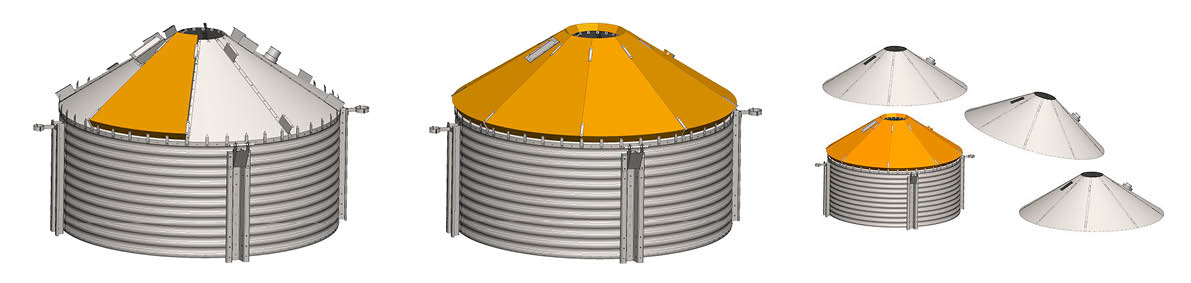
Roof insulation system
The insulation system developed by Silos Córdoba is integrated into the roof structure and designed for straightforward installation while maintaining the mechanical performance of the silo.
Wall insulation for enhanced protection
Although the roof receives the highest solar load, wall insulation can provide additional protection in locations exposed to prolonged high temperatures or large seasonal temperature variations.
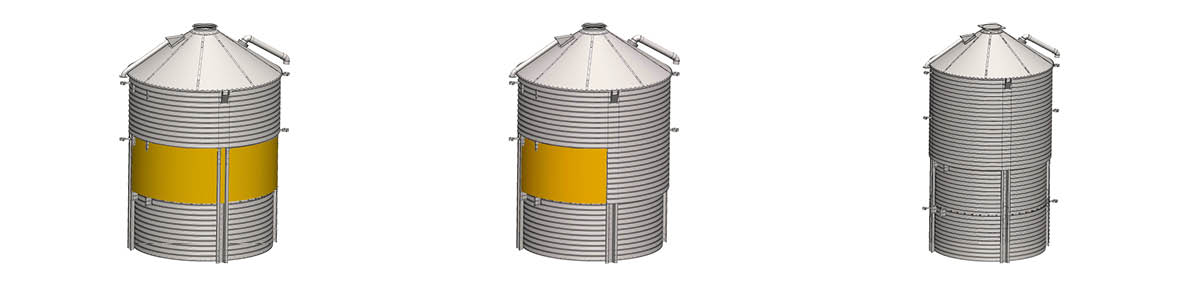
Wall insulation system
By reducing heat transfer through the silo walls, the system contributes to a more homogeneous temperature distribution within the stored grain.
Applications in international projects
Thermally insulated silos are particularly suitable for:
◊ Grain terminals in desert regions.
◊ Feed mills operating in hot climates.
◊ Long-term strategic grain reserves.
◊ Rice, wheat, maize and soybean storage facilities.
◊ Locations with large day-night temperature variations.
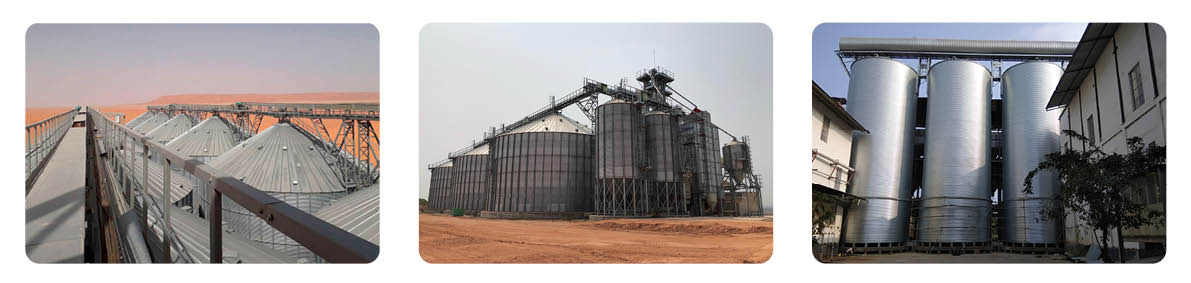
As global grain storage projects continue to expand into regions with increasingly demanding climatic conditions, thermal insulation has become an important design consideration rather than a simple optional feature.
Designing storage systems for challenging environments
Every storage project must be adapted to the local climate, the type of grain stored and the expected storage duration.
The combination of thermal insulation, efficient aeration systems and grain temperature monitoring allows operators to maintain grain quality under even the most challenging environmental conditions.
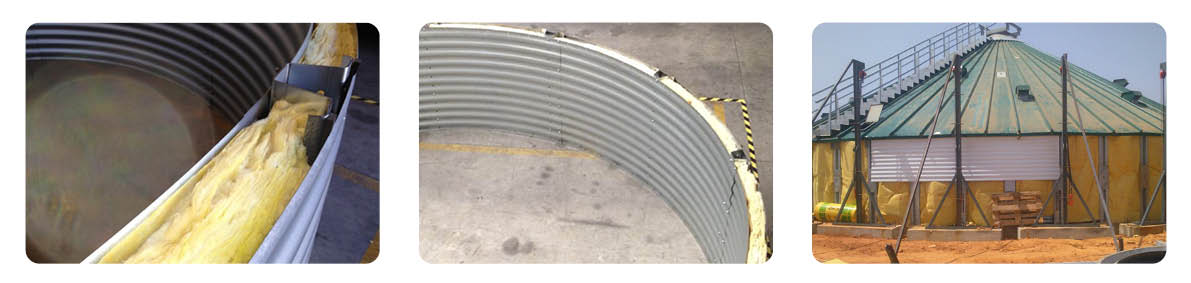
Depending on the requirements of each facility, different insulation configurations can be implemented on the roof, wall rings or hopper cone to achieve the desired level of thermal protection.
For more detailed information about the insulation systems available for steel silos, download our technical guide.