
Maintaining grain quality during storage requires careful control of factors such as moisture, aeration and, above all, temperature.
Even when grain enters the silo in optimal condition, the appearance of moisture pockets or biological activity can lead to temperature increases that accelerate deterioration.
For this reason, thermometry systems have become an essential tool in modern storage facilities, helping operators detect problems early and take corrective action before grain quality is affected.
Why Does Temperature Increase Inside a Silo?
Many people assume that the main source of heat inside a metal silo comes from solar radiation. However, although the external steel sheets may become hot during the day, this increase in temperature is usually superficial and has little effect on the grain mass stored inside.
The real risk comes from what happens within the grain itself.
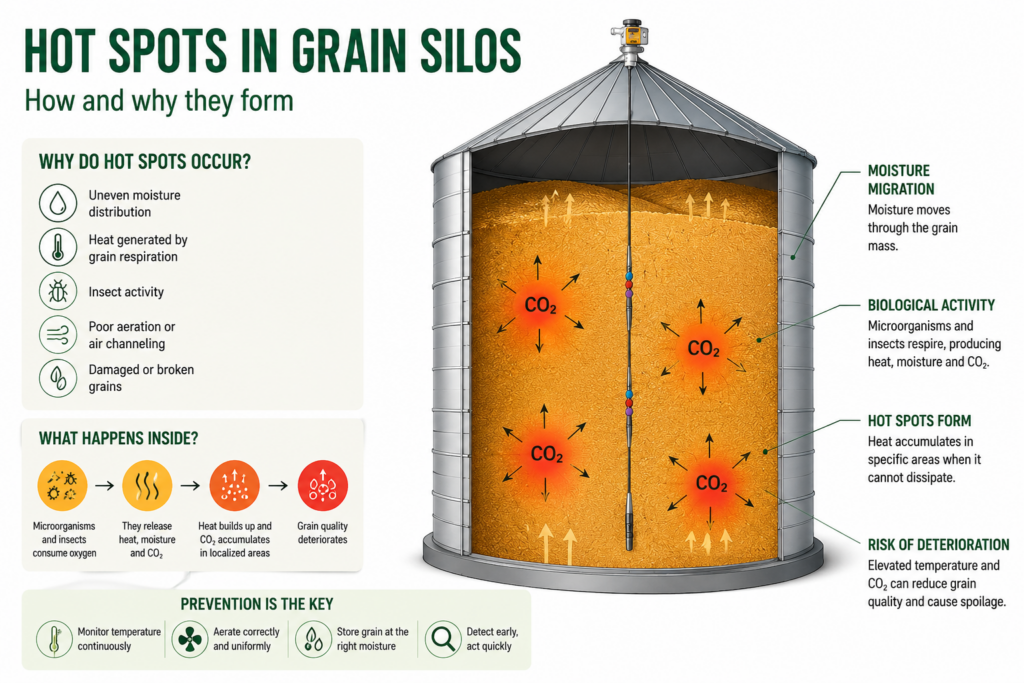
When moisture accumulates in certain areas or aeration is insufficient, biological activity can develop. Grain respiration, mould growth, insect activity and fermentation processes generate heat, creating localized areas known as hot spots.
These hot spots can spread over time, causing:
√ Grain spoilage.
√ Quality deterioration.
√ Loss of commercial value.
√ Increased risk of mould development.
√ Higher chances of insect infestation.
√ Significant economic losses.
Detecting these problems at an early stage is essential to preserve grain quality and avoid costly corrective actions.
What Is a Hot Spot?
A hot spot is a localized area within the grain mass where temperature rises abnormally.
These areas are often caused by uneven drying, condensation, moisture migration or inadequate ventilation. As biological activity increases, heat generation accelerates, creating a cycle that further deteriorates the grain.
The challenge is that these problems usually begin long before there are any visible signs. By the time spoilage can be detected during unloading, part of the grain may already have been affected.
How do hot spots develop inside a silo?
The following infographic illustrates the main factors involved in the formation of hot spots and why early detection is essential to preserve grain quality.
How Thermometry Systems Work
Thermometry systems continuously measure temperature at different points inside the silo.
The system consists of sensor cables strategically distributed throughout the grain mass, providing real-time temperature readings from multiple levels and locations. This allows operators to monitor storage conditions accurately and identify unusual temperature variations as soon as they occur.
When an abnormal increase is detected, the system can generate alarms so that corrective measures can be taken immediately.
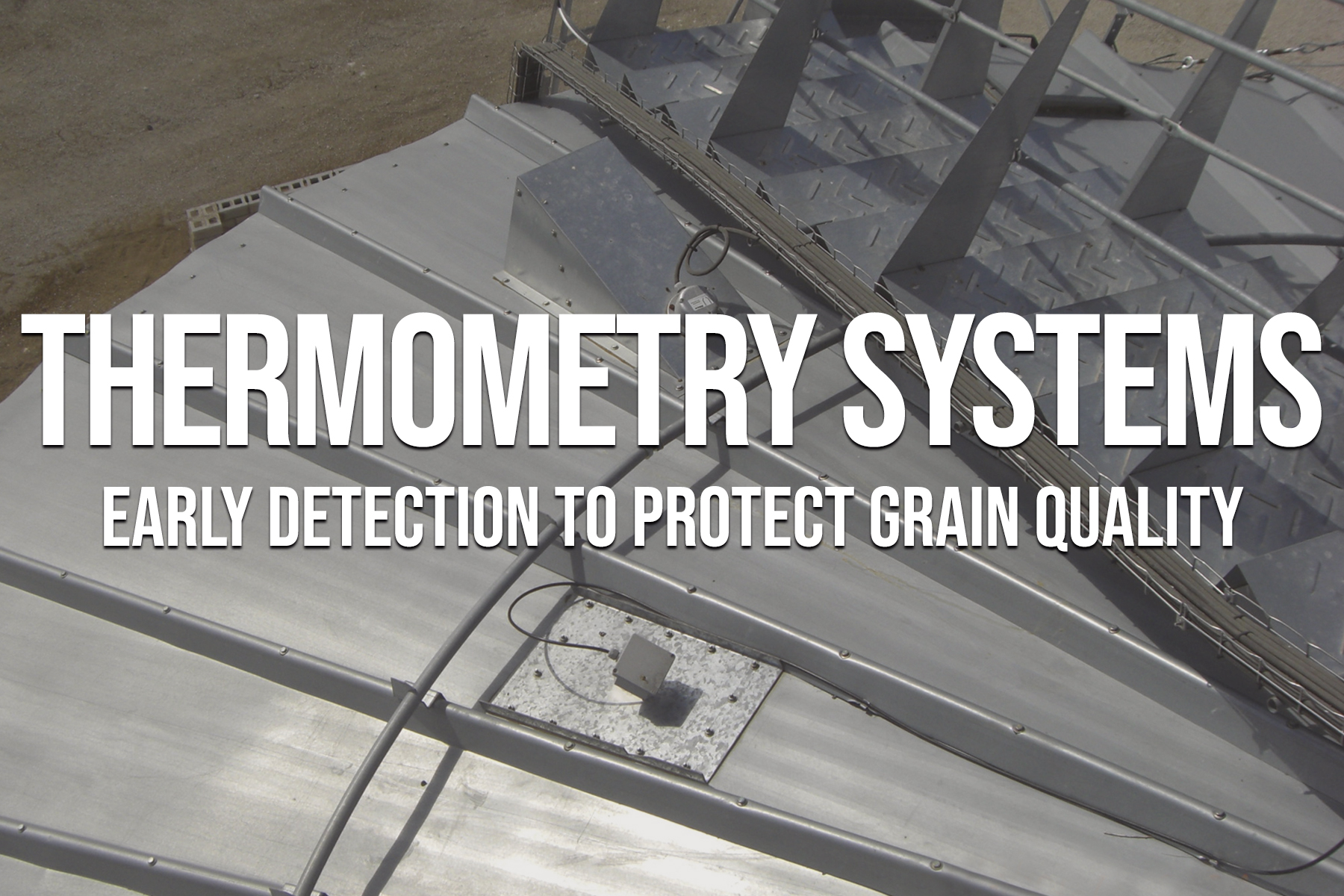
At Silos Córdoba, thermometry systems can be integrated into the silo structure through specially designed supports adapted to the roof configuration and the specific requirements of each installation.
Acting Before Problems Become Losses
The real value of a thermometry system is its ability to detect potential issues before they impact grain quality.
Once a temperature increase is detected, operators can take corrective actions such as:
♦ Activating the aeration system.
♦ Improving air circulation inside the silo.
♦ Recirculating the grain.
♦ Transferring grain to another storage location.
♦ Inspecting the affected area to determine the root cause.
Early intervention helps maintain grain quality and significantly reduces the risk of spoilage.
Thermometry and Aeration: A Complementary Solution
Thermometry and aeration work hand in hand.
While thermometry provides accurate information about the condition of the grain, aeration helps regulate temperature and reduce moisture differences within the grain mass. Together, these systems create safer storage conditions and contribute to preserving grain quality over long periods.
Protecting Grain Quality
The value of the grain stored inside a silo is often far greater than the cost of the storage structure itself.
For this reason, early detection of temperature changes is one of the most effective ways to protect grain quality and avoid losses during storage.
Combined with proper aeration, thermometry systems allow operators to act before a minor issue becomes a serious problem, helping ensure safe and efficient grain preservation.
Looking for additional ways to protect grain quality? Discover how thermal insulation systems help maintain stable storage conditions in extreme climates. You can read the article here.